Best-Practice-Framework-of-Agentic-Coding
Best Practice Framework: Idea → Requirements → Design → Tasks → Implementation
1. Idea Phase
- Articulate the core concept - What problem are you solving?
- Define the value proposition - Why does this matter?
- Identify the target outcome - What success looks like
- Consider alternatives - Are there simpler approaches?
2. Requirements Phase
- Functional requirements - What must the system do?
- Non-functional requirements - Performance, security, scalability
- Constraints - Time, resources, existing tech stack
- Acceptance criteria - How do we know it’s done?
3. Design Phase
- Architecture decisions - High-level structure
- Technology choices - Frameworks, libraries, patterns
- Data flow - How information moves through the system
- Interface contracts - APIs, function signatures, data schemas
4. Tasks Phase
- Break down into atomic units - Each task should be independently completable
- Sequence dependencies - What must happen before what
- Identify risks - Where might things go wrong?
- Plan validation - How to test each task
5. Implementation Phase
- Execute in planned order - Follow the task sequence
- Minimal viable code - Only what’s needed for the requirement
- Validate incrementally - Test each piece as you build
- Refactor if needed - Clean up after core functionality works
Why This Prevents Amazon Q Hanging/Inefficiency
The Problem with Skipping Idea Phase:
1 | ❌ "Build me a user system" |
The Power of Starting with Idea:
1 | ✅ "I want users to collaborate on documents in real-time, like Google Docs" |
Practical Application Examples
Example 1: E-commerce Feature
Idea: “Customers abandon carts because checkout is too complex”
Requirements: One-click checkout for returning customers
Design: Store payment methods, streamlined UI flow
Tasks: Payment storage, UI simplification, security validation
Implementation: Minimal code for core flow
Example 2: API Optimization
Idea: “Our API is slow because we’re making too many database calls”
Requirements: Reduce response time by 50% without changing API contract
Design: Implement caching layer and query optimization
Tasks: Add Redis, optimize queries, implement cache invalidation
Implementation: Focused changes to bottleneck areas only
Amazon Q Interaction Best Practices
Communicate the Full Journey
1 | "IDEA: I want to add real-time notifications to keep users engaged |
Use Progressive Disclosure
- Start with the idea and get alignment
- Drill into requirements together
- Explore design options
- Plan tasks collaboratively
- Execute implementation efficiently
Leverage Context Effectively
@workspacefor understanding the bigger picture
@folder for architectural context
@file for implementation details
Share your idea first, then provide relevant context
Red Flags That Indicate Skipped Phases
- Vague requests - “Make it better” (missing idea)
- Feature creep - Requirements keep expanding (unclear idea)
- Over-engineering - Complex solutions for simple problems (poor design)
- Rework cycles - Constant revisions (inadequate planning)
The Compound Benefits
Each phase informs and improves the next:
- Clear idea → More precise requirements
- Precise requirements → Better design choices
- Better design → Cleaner task breakdown
- Clean tasks → Efficient implementation
- Efficient implementation → Less debugging and rework
This approach works for any agentic coding tool, not just Amazon Q. The key is treating the AI as a collaborative partner in the entire creative process, not just a code generator.
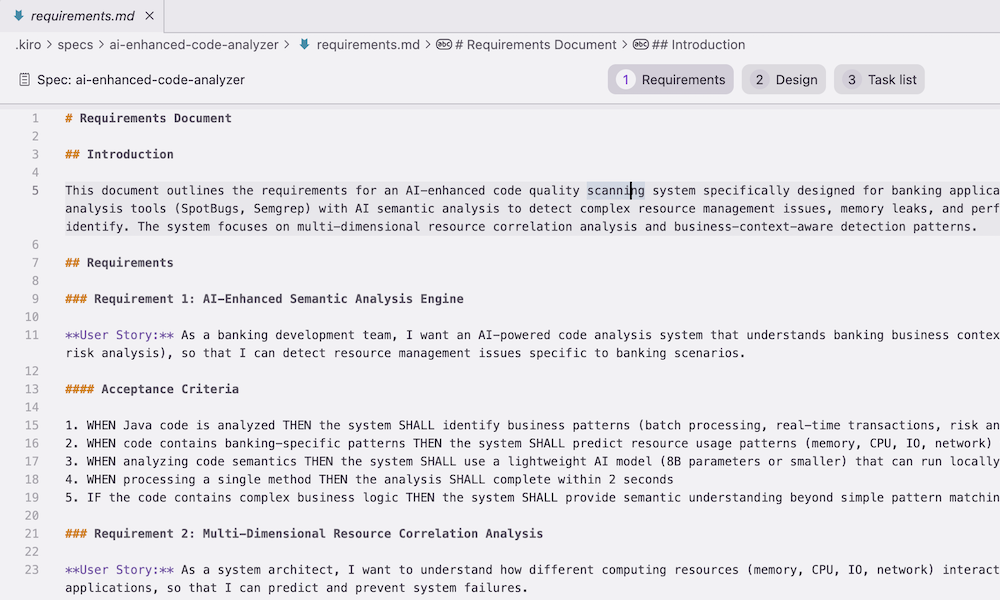
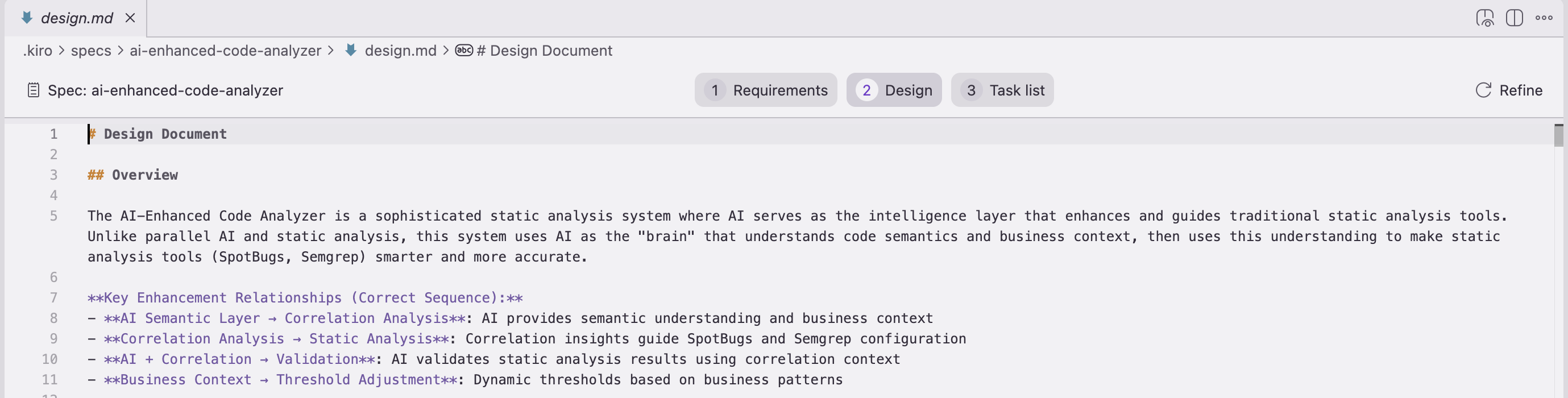
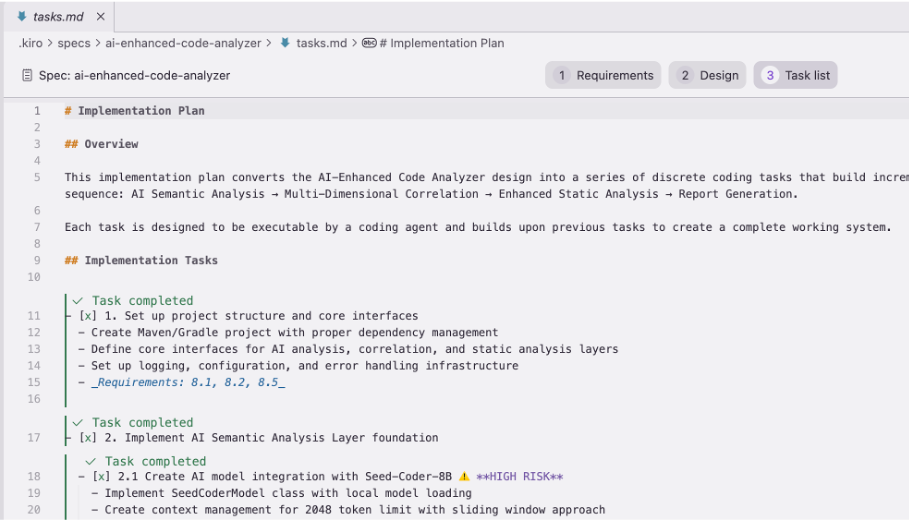
Example
requirements.md
Design.md
Task.md
Reference Link ==> https://catalog.workshops.aws/qadvanced/en-US/00-introduction